Emergency Tree Removal in Kelowna, BC
A tree on the roof, across the driveway or hanging over the deck after a windstorm. We make it safe first, then take it down in controlled sections and clean up.Storm, Fallen and Hazard Trees, Handled Fast
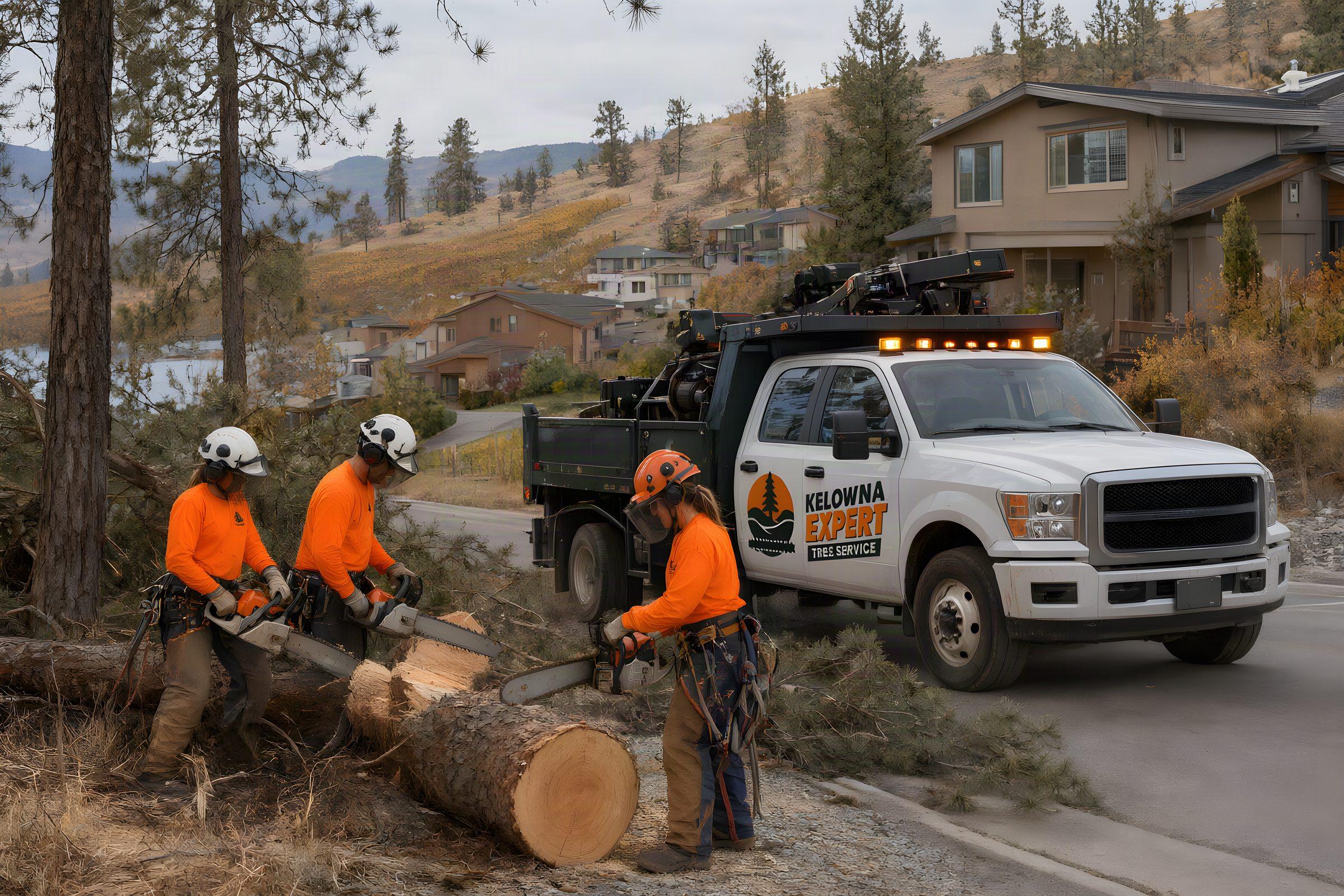
Kelowna Expert Tree Service handles emergency tree removal across Kelowna, and most calls start the same way: a text with a blurry photo of a pine lying on a roof. We're two brothers who've been cleaning up after Okanagan storms for more than 5 years, and in daylight one of us answers within the hour. We make the tree safe first. Then we cut it free in sections with rigging (ropes and pulleys that lower each piece slowly), so the weight leaves your roof a bit at a time. Kelowna Expert Tree Service provides emergency tree service, hazard tree removal and storm damage tree removal to Kelowna and surrounding Okanagan communities, including West Kelowna, Lake Country, Peachland and Vernon.
Honestly, not every hazard is an emergency. A tree with a fresh lean should come down on a planned date, before the next storm decides for you. Same for a crack where two big stems meet, which arborists call a co-dominant union, or pitch tubes up the trunk: little blobs of sap where bark beetles bored in. For emergency tree removal, Kelowna homeowners can call or text photos and hear back the same day.
When You Call Us
Same routine on every storm call, whatever time it is.
- Storm texts answered within the hour in daylight
- Area taped off and made safe before any cutting
- Insurance photos before anything moves
- Weight lowered off the roof in small sections
- A written price before the main removal
- Brush chipped, wood hauled or stacked
Types of Emergency Tree Removal We Handle
Every one of these needs its own plan. These are the calls we get most after an August windstorm or a soggy spring.
Tree on a House or Roof
We tie the tree off before a single cut, then work from the top down so the weight leaves your roof in small pieces. Cut a loaded trunk at the base and it can spring sideways. Every time we've seen a dented roof turn into a broken one, it started right there. Once the tree is off, the roof is clear for a tarp or a roofer.
Fallen Tree Removal
A tree already on the ground across the driveway or fence is safer, but it's still loaded, a bit like a bent fishing rod. Trunks pinned under their own limbs can roll or jump when cut. My brother reads the tension and picks the cutting order; I run the saw. Then we chip the crown and haul or stack the wood.
Storm-Damaged Trees Still Standing
A torn limb hanging in the crown, a split leader or a fresh crack in the trunk is often worse than a whole tree on the lawn, because nobody knows when it'll let go. We call those hanging limbs hangers, and we take them down first with rigging. Then we look at the rest. Sometimes it only needs a prune, and we'll tell you so.
Dead Tree Removal
Dead conifers go brittle within a season or two, and dead limbs drop on calm days too. In Kelowna it's mostly beetle-killed ponderosa and lodgepole pine. On one Upper Mission lot we took down a 28 m dead pine on a slope too steep for a truck, one roped piece at a time. Better on a planned Tuesday than a stormy Saturday night, and planned work skips the storm premium.
Leaning and Uprooted Trees
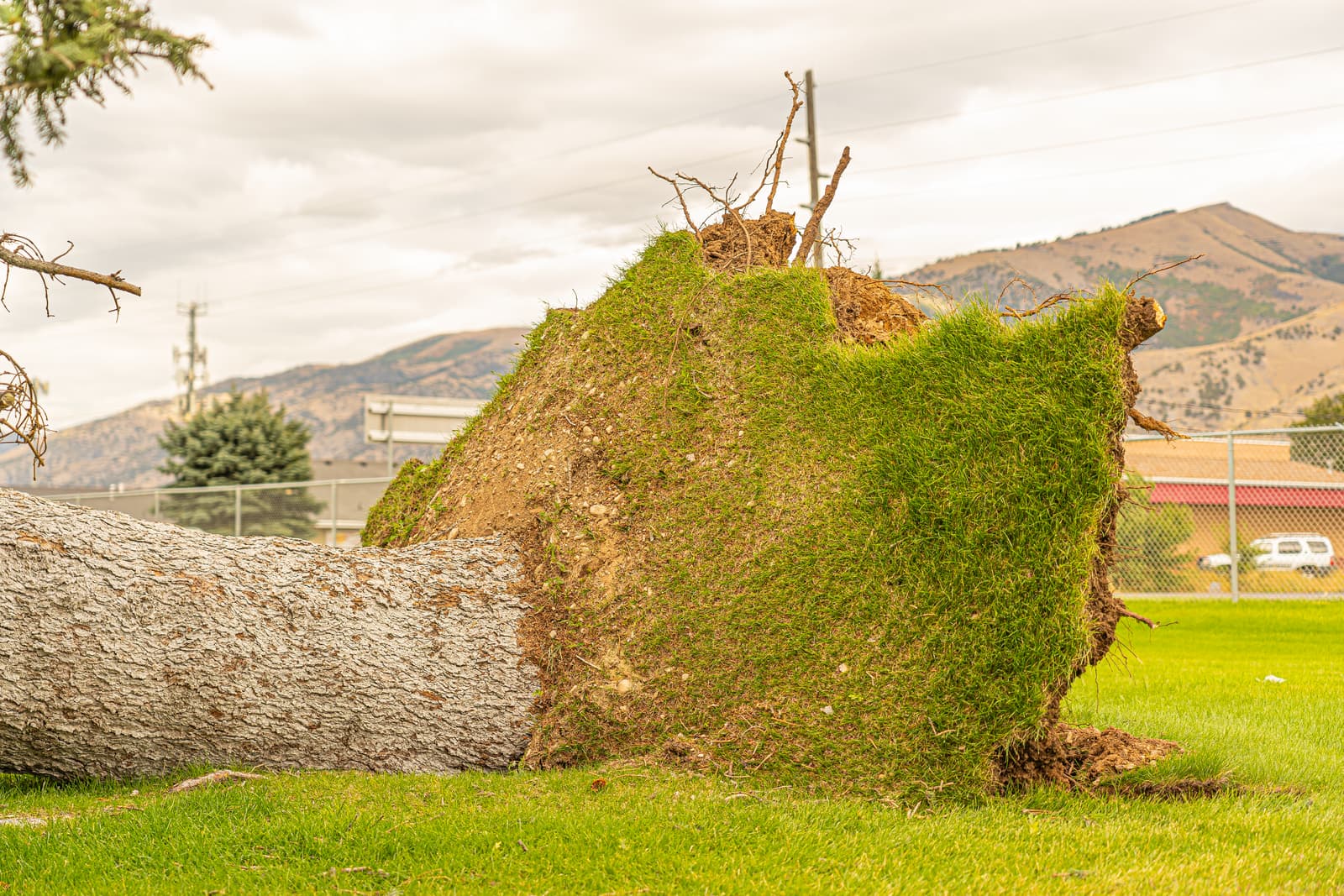
A lean the tree has always had is usually fine. A new lean with lifted soil or cracked roots on the far side is not. Wet ground after snowmelt plus shallow-rooted spruce and cottonwood is the usual recipe. These come down fast, because the root plate (the disc of roots and soil holding the tree up) can let go at any time.
Trees Near Power Lines After a Storm
If a tree is on or touching a line, stay 10 m back, treat the wire as live and call FortisBC first. Only their crews make the line safe. Once the utility has cleared it, we take the rest of the tree out of your yard, including the piece sitting on your fence or roof.
How Do You Know If a Tree Is a Hazard?
A tree is a hazard when it has a defect that could make it fail and something worth protecting underneath: your house, a car, a play area, the neighbour's garage. Look for a split trunk, a new lean with lifted soil, dead or hanging limbs, mushrooms or shelf-like conks at the base, and pitch tubes from bark beetles.
Arborists judge risk three ways: how likely the tree is to fail, how likely it is to hit something, and how bad that would be. ISA's Tree Risk Assessment Qualification (TRAQ) is the standard method. In Kelowna's bylaw areas, Bylaw No. 8041 lets a dangerous tree come down before the permit is issued, as long as it's reported to the City right away.
- Cracks or splits through the trunk or a major union
- A lean that is new or getting worse, with heaved soil
- Dead limbs over the roof, driveway or play area
- Mushrooms, conks or soft wood at the root flare
- Pitch tubes and a crown fading from green to red
How Much Does Emergency Tree Removal Cost in Kelowna?
Emergency tree removal in Kelowna usually costs 30% to 100% more than the same job booked ahead, and most residential emergency jobs run $1,500 to $6,500 in 2026. The premium pays for after-hours crews and the extra rigging needed to cut a loaded tree off a roof without causing more damage.
Many home insurance policies cover removal when a tree damages a covered structure. Photos before work starts and an itemised invoice make that claim a lot easier. We photograph the yard before the first cut on every job, storm or not, so you'll have both either way.
| Job | Typical 2026 range | What moves the price |
|---|---|---|
| Residential emergency removal | $1,500 to $6,500 | Tree size, what it is resting on |
| After-hours or storm premium | 30% to 100% above scheduled | Time of call, crew size |
| Planned hazard tree, 20 to 50 ft | $650 to $1,500 | Felled whole or dismantled |
| Planned hazard tree, 50 to 80 ft | $1,500 to $3,000 | Decay, lean, access |
| Near power lines | 25% to 50% premium | Line drop, utility arborist |
| Crane assist | Adds $600 to $1,500 | Crane size and set-up |
Published Kelowna-area ranges for 2026, not a quote.
What to Do Before We Arrive
Your safety comes first, then the tree, then the paperwork. Four things to do while you wait for us:
Move People Away From the Tree
Get everyone out of the rooms under the trunk or crown, and keep kids and pets well back. A tree resting on a roof can settle and shift without warning.
Stay 10 m From Downed Lines
Treat every wire as live, even with the lights out. Call FortisBC and keep everybody 10 m away until their crew gives the all clear.
Photograph the Damage
From somewhere safe, take wide shots and close-ups before anything moves: the tree, the roof, the fence, any cars. Then call your insurer, and then us.
Do Not Cut Loaded Wood Yourself
Leave the chainsaw in the shed. Wood pinned under weight stores energy that lets go when it's cut. About 4 in 10 of our removals come down on ropes for exactly that reason.
Our Emergency Tree Removal Process
Call and Send Photos
Tell us where the tree is and what it's sitting on. Send us 2 or 3 photos by text and we'll show up with the right ropes and the right gear on the first trip.
Make It Safe
We tape off the area, look for wires and tie the tree so it can't shift any further. The insurance photos happen now, before anything moves.
Remove and Clean Up
The tree comes off in controlled sections, the brush goes through the chipper, and the wood gets hauled or stacked where you want it. Then we rake. Simple as that.
Emergency Tree Removal FAQs
Do you do emergency tree removal on weekends?
Yes, for real emergencies. A tree on a house, blocking your only driveway or hanging over a play area gets a response outside normal hours, weekends included. Planned hazard removals are booked on weekdays. When it's urgent, call or text instead of using the form, and send photos so we know what to bring.
Will my home insurance pay for emergency tree removal?
Often, yes, when a tree damages a covered structure like your house, garage or fence. Most policies won't pay to remove a tree that fell without hitting anything. Check your policy or call your insurer, and keep our before photos and the itemised invoice for the claim.
Do I need a permit to remove a dangerous tree in Kelowna?
Most Kelowna yards need no permit at all. In the bylaw areas, meaning riparian land and slopes of 30% or more, Bylaw No. 8041 lets a dangerous tree come down before a permit is issued if it's reported to the City immediately. We help you make that report.
What happens to a tree that falls on a power line?
Stay at least 10 m away and call FortisBC. Under WorkSafeBC rules, only utility crews or certified utility arborists may work on trees touching energized lines. Once the line is safe, we remove the rest of the tree from your property and clean up.
Can you remove a tree that is still standing but cracked?
Yes, and it's often more urgent than a tree already on the ground, because a crack through the trunk or a major union can fail with no warning. We take the cracked or hanging sections down first with rigging, then decide whether the rest can be saved.
How fast can you get to a fallen tree in Kelowna?
For a tree on a structure we aim to make the site safe the same day or the next morning, depending on when you call and how many trees came down across town. In daylight we usually answer a storm text within the hour. Fallen trees on a lawn or fence with no further risk get the next open slot.