Forestry Mulching in Kelowna, BC
Overgrown brush, thickets and small trees cut and ground where they stand, leaving a layer of mulch on the ground instead of burn piles and truckloads.One Machine That Cuts, Grinds and Spreads
Kelowna Expert Tree Service runs forestry mulching for Kelowna acreages, lots and rural properties: brush mulching, understory thinning, small tree removal, ladder fuel reduction, fuel breaks, trail and fence line clearing, and pasture reclamation. A forestry mulcher is a rotary drum fitted with steel teeth that shreds standing vegetation, so one machine cuts, grinds and spreads the material in a single pass. Kelowna Expert Tree Service provides forestry mulching and brush mulching to Kelowna and surrounding Okanagan communities, including West Kelowna, Lake Country, Peachland, Vernon and Joe Rich.
Nothing gets piled, burned or trucked off. The ground stays covered, which matters on the dry slopes around the valley where bare soil washes out in the first heavy rain. You also skip the wait for a burning window and the cost of hauling brush that was never worth moving. We quote forestry mulching, Kelowna and area, by the acre or by the hour.
Why Owners Choose Mulching With Us
What you can count on from the first site walk to the last pass.
- Quoted by the acre or by the hour, your choice
- Large trees felled by hand before the mulcher starts
- Keeper trees and boundary pins marked with you
- Mulch spread evenly, never left in windrows
- Machine sized to your slope and access
- Owner running the head, not a hired operator
Types of Forestry Mulching Jobs
The same machine does very different work depending on what you want the land to be afterward.
Brush and Understory Mulching
Thick understory of small conifers, aspen whips and shrubs under a stand of mature pine is ground down while the big trees stay. The stand opens up, walking becomes possible, and the mulch shades out some of the regrowth.
Fuel Breaks and Wildfire Thinning
Okanagan ponderosa pine stands evolved with low-intensity fires every 5 to 10 years that kept the understory thin. Mulching does that job without the fire. It is the main tool on the acreage side of our FireSmart wildfire mitigation work.
Pasture and Orchard Reclamation
Fields and old orchard blocks taken over by aspen and young pine can be mulched back to open ground. Trembling aspen spreads from one shared root system and resprouts after cutting, so pasture work usually needs a follow-up pass a season later.
Trail and Fence Line Clearing
A mulcher opens a trail, a fence line or an access road through brush in one pass and leaves a soft surface behind. It is the quickest way to get a fence crew or a quad back onto a property line.
Lot Line and View Clearing
Overgrown lot edges and slopes below a house can be cleared of brush and small trees to open a view or a sightline, while larger trees are kept or limbed instead.
Pre-Build Mulching
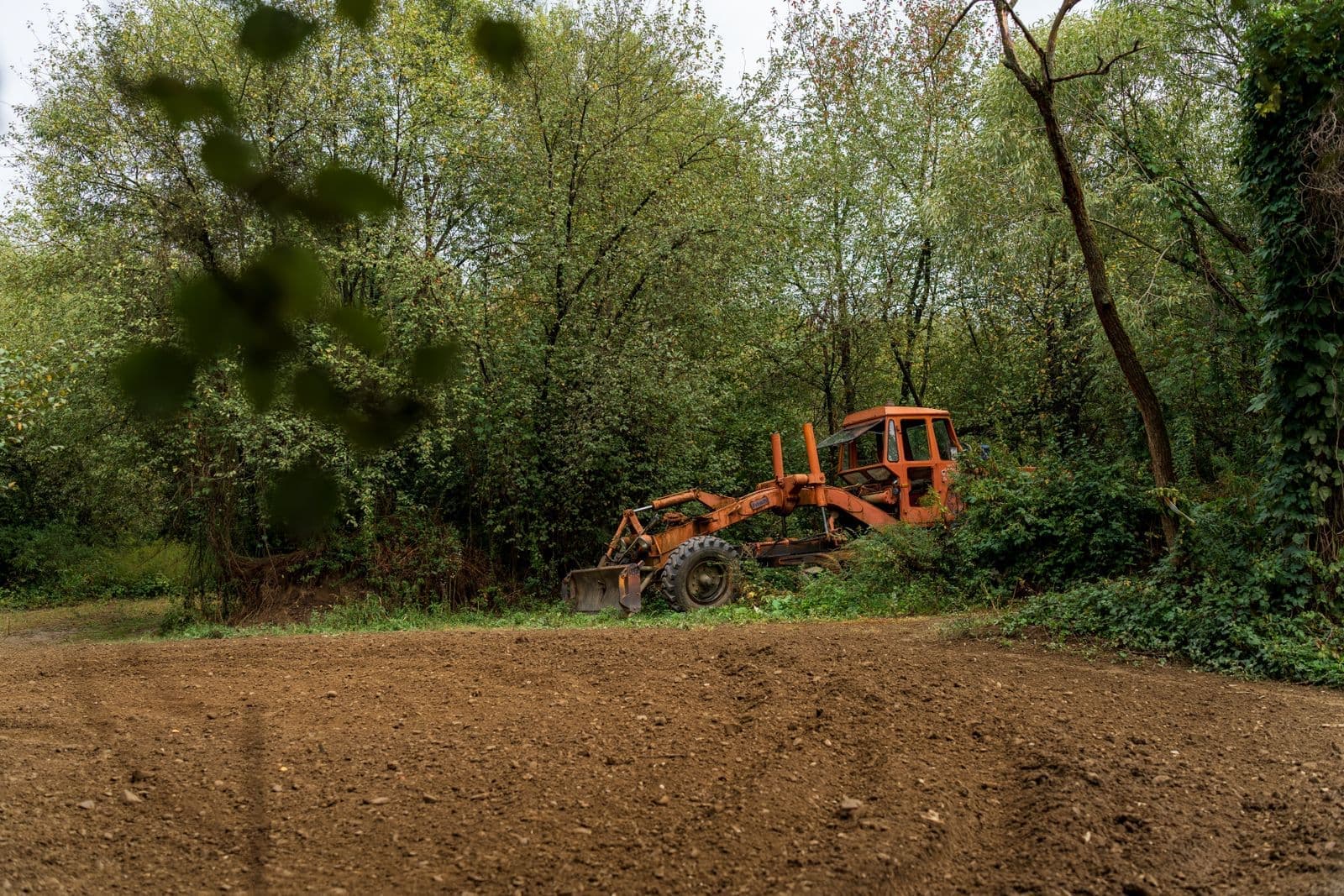
On a building site, mulching takes care of the brush and small trees first. Stumps under the footprint are then pulled as part of land and lot clearing, so you pay for excavation only where the house goes.
What Can a Forestry Mulcher Clear, and What Can't It?
A forestry mulcher clears brush, shrubs, saplings, small trees and slash, grinding them into a mulch layer in a single pass. It is not the right tool for large mature trees, rock, wet riparian ground or stumps that must come out below grade. Big trees are felled by hand first, and stumps are pulled by excavator.
The mulcher also leaves roots in the ground, which is usually what you want on a slope: the roots and the mulch layer together hold soil. Where a driveway or foundation is going in, those roots have to be dug out, and that part is excavation, not mulching.
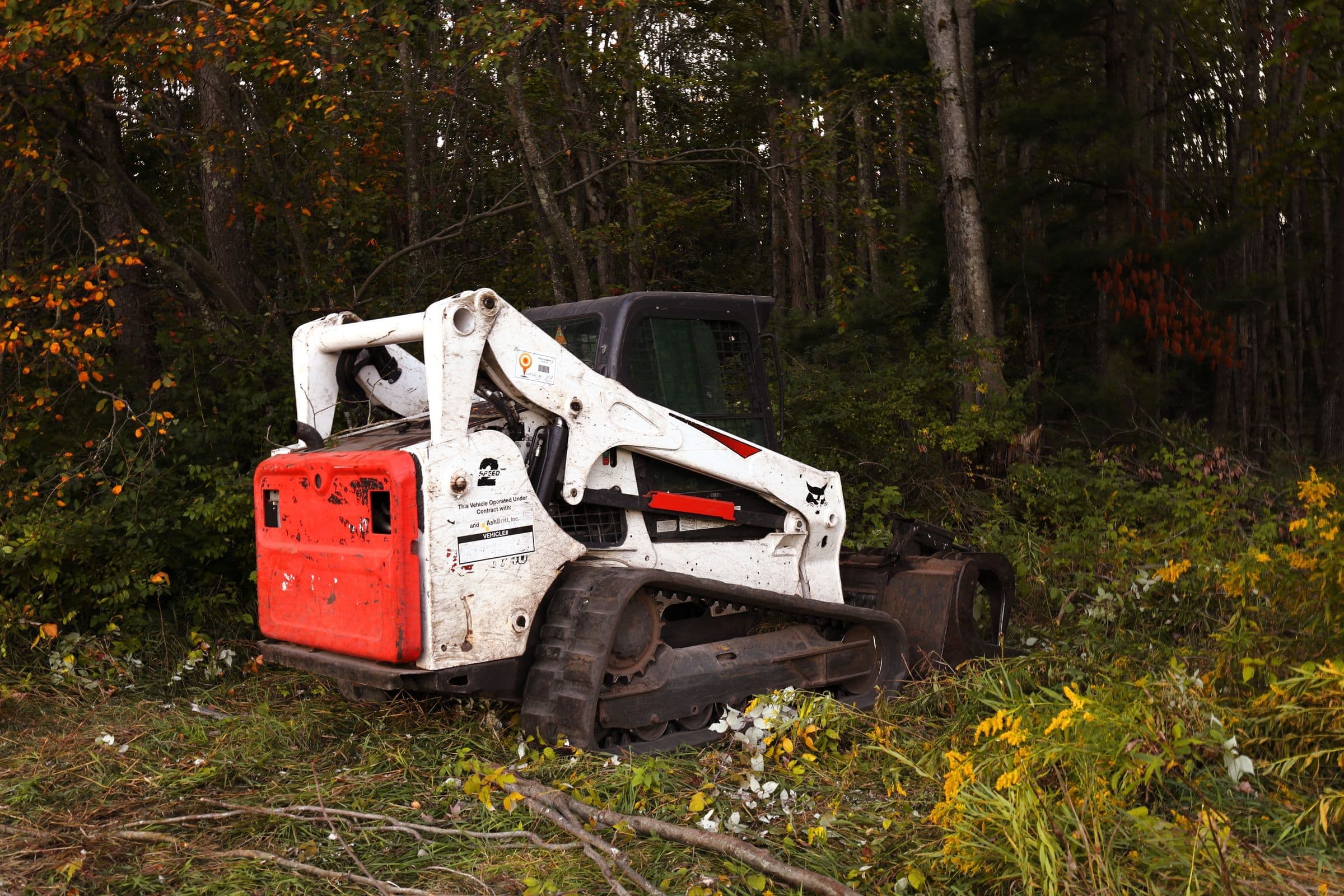
Forestry mulchers are built either as dedicated tracked tractors or as mulching heads that mount on an excavator or a skid steer. We match the machine to your ground instead of the job to whatever machine is handy.
Dedicated Mulching Tractor
A purpose-built tracked mulcher carries the most power to the drum and covers open acreage fastest. It is the best choice for large, fairly even blocks of brush and small trees.
Excavator Mulching Head
On an excavator the head reaches out over steep banks, gullies and ditches while the machine sits on stable ground. It also reaches up, so it can take the tops off taller saplings and work around trees we are keeping.
Skid Steer Mulching Head
A skid steer is small and light, so it fits through gates and between buildings on residential lots. It suits lighter brush and tight spaces rather than big acreage.
How Much Does Forestry Mulching Cost in Kelowna?
Forestry mulching in Kelowna typically costs $400 to $800 per acre in 2026, rising to as much as $2,000 per acre for dense growth. Small or awkward jobs are often priced by the hour instead, at about $125 to $300 per hour depending on the size of the machine.
Density matters most: scattered brush goes fast, while a thicket of young pine slows the drum down. Steep or rocky ground and big trees that must be felled first also add time.
| Job | Typical 2026 range | What moves the price |
|---|---|---|
| Forestry mulching, typical acre | $400 to $800 per acre | Brush height, stem count |
| Forestry mulching, dense growth | Up to $2,000 per acre | Thickets, slope, rock |
| Hourly mulching | $125 to $300 per hour | Machine size, travel |
| Light land clearing, for comparison | $500 to $1,500 per acre | Cut, chip and haul |
| Heavy land clearing, for comparison | $3,500 to $6,000 or more per acre | Mature timber, stumps out |
Published Kelowna-area ranges for 2026, not a quote. You get a written per-acre or hourly price after we walk the property.
Forestry Mulching vs Cut-and-Haul vs Excavator Clearing
There are three common ways to clear brush and small trees in the Okanagan. The right one depends on what the ground is for next.
Forestry Mulching
One machine, one pass, nothing leaves the site. Soil stays covered and roots stay in place, so slopes hold. Best for acreage, fuel breaks, trails and land that will stay treed or go back to grass. Published 2026 rates start around $400 per acre.
Cut, Chip and Haul
A crew fells, chips and trucks the material away. It suits tight urban lots where a mulch layer is not wanted and machines cannot fit, but every truckload adds cost and the ground is left bare.
Excavator Clearing
An excavator pushes over trees and pulls stumps and roots, leaving bare dirt ready for footings or a driveway. It is the right finish under a building, and the most disruptive anywhere else. Many build sites use mulching on the edges and the excavator only on the footprint.
How a Mulching Job Runs
Walk the Boundaries
We find the property pins, mark keeper trees, and check slope, rock and any creek or wet ground on the site.
Fell the Big Stuff
Trees too large for the drum are felled by hand and bucked, with the logs stacked if you want them.
Mulch and Spread
The mulcher works the site in passes, spreading an even layer, then we walk it with you before we load out.
Forestry Mulching FAQs
Does forestry mulching stop brush from growing back?
It slows regrowth but does not stop it. The mulch layer shades the ground, yet species like trembling aspen resprout from their shared root system after cutting. On pasture or a fuel break, plan a light follow-up pass a season or two later, which costs far less than the first clearing.
Is the mulch layer a fire hazard?
Within 10 m of a house it can be, which is why FireSmart BC advises against bark or woody mulch in the Intermediate Zone. Farther out, a thin layer on the ground carries far less fire up into tree crowns than the standing brush and ladder fuels it replaced. We keep mulch outside that 10 m ring.
Can a forestry mulcher work on steep slopes?
Yes, within limits. An excavator-mounted head can sit on a bench or road and reach out over slopes and gullies, which is how we handle most Okanagan hillsides. Very steep or rocky faces may need hand cutting instead. In Kelowna, slopes of 30% or more can fall under Bylaw No. 8041, so we check first.
Do I need a permit for forestry mulching?
Usually not for brush on private land. In Kelowna a permit is needed only to remove protected trees, 100 mm or more in diameter, in riparian areas or on slopes of 30% or more. Lake Country does not require a development permit when the work follows its Wildland Fire DPA guidelines and FireSmart principles.
How big a tree can a forestry mulcher handle?
Mulchers are built for brush, saplings and small trees, and capacity depends on the machine. Mature ponderosa pine and Douglas-fir are felled with a saw first and the trunks bucked or stacked, then the mulcher handles the tops and limbs. We tell you on the site walk which trees need hand felling.
When is the best time of year for mulching?
Fall and winter suit most jobs. Bird nesting season typically runs March 1 to August 31, frozen ground carries tracked machines with less rutting, and work finished before spring leaves the property ready for fire season. Summer mulching is possible but is limited by fire danger and nesting birds.